Digital or printed invitations for a Filipino wedding?
Choosing between digital or printed invitations for a Filipino wedding is usually framed as a question about taste, and it almost never is. Printing does one thing better and a link does four things better, and the sensible answer for most couples here turns out to be a small amount of the first and a lot of the second.
EtiquetteReviewed 4 min read
What printing is genuinely better at
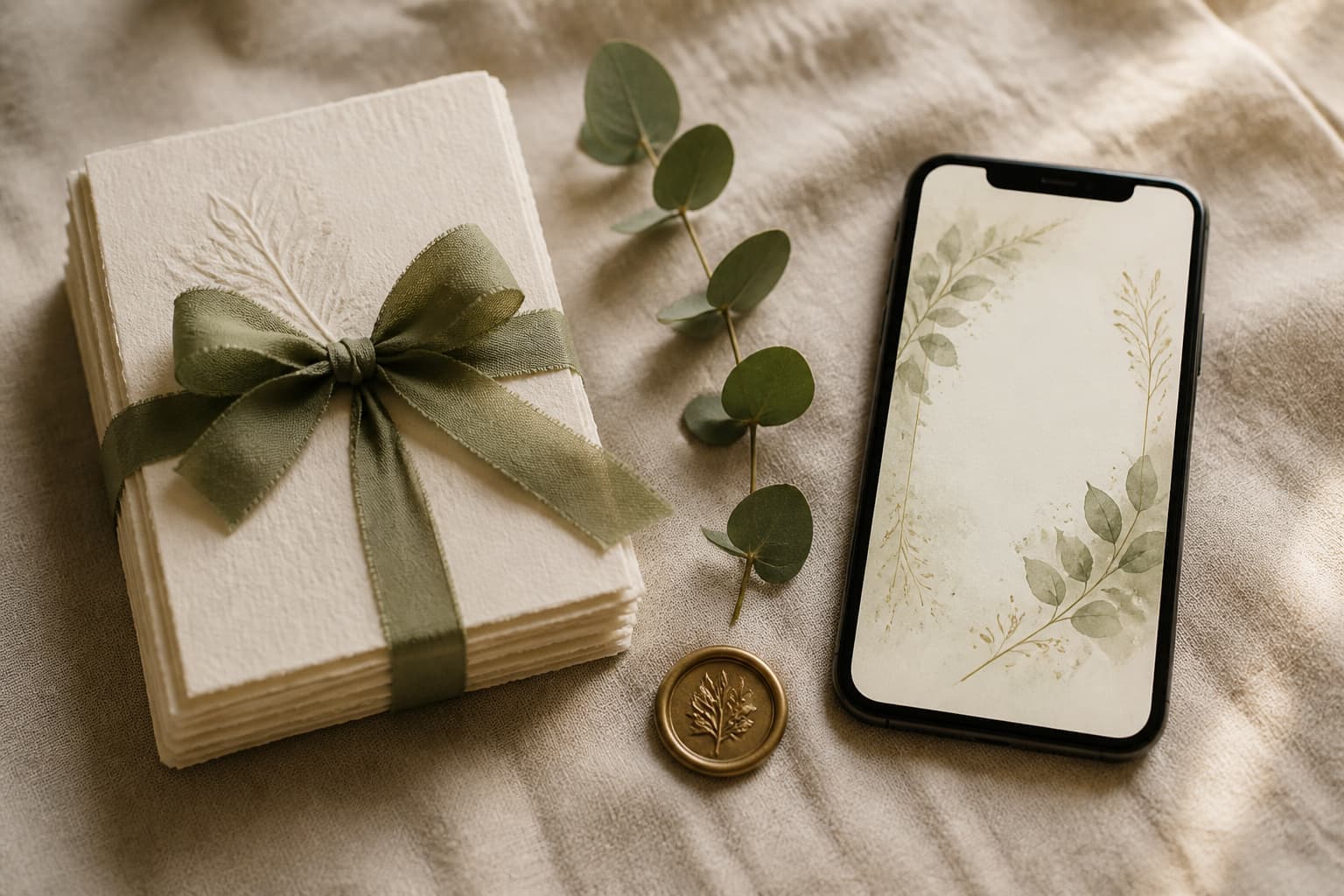
One thing, and it is not a small thing: it can be held. A card on a lola's altar or stuck to a tita's fridge does something a link cannot, and for the people who framed your parents' invitation fifty years ago, receiving a physical object is part of being properly asked.
There is a second, quieter advantage. A printed invitation given by hand carries a small ceremony with it. Handing a card to your ninong across a table is a moment; forwarding him a link is a notification. For the twenty or thirty people whose presence matters most, that difference is worth the printing cost on its own.
What printing is not better at
Being read carefully. A card gets looked at once and put somewhere, which is why the call time and the parking notes on a printed invitation get asked about again in the group chat two weeks later.
What a link is better at
Four things: replies you can count, corrections that reach everybody, directions that open in Waze, and the photographs afterwards. All four are things that happen after the invitation has been read, which is exactly the window in which a printed card has finished working.
- A reply that carries a name and a seat count, so a household of four is one reply for four
- A venue change that reaches every guest at once, including the ones who read it in March
- A map pin and a landmark, rather than an address a driver has to interpret
- Somewhere for the well wishes and the guest photographs to land, and stay
The photographs are the part people underrate in advance and mention most afterwards. Your photographer gives you the posed record of the day; the guest uploads give you the one nobody was posing for.
What each one costs for a Filipino guest list
Printing is priced per card, so three hundred guests means three hundred cards, envelopes and delivery, commonly PHP 60 to PHP 200 each. A link is priced once. Ours is ₱4,999 for a wedding, whether forty people open it or four hundred.
| Guests | Printed, at PHP 120 a card | One link |
|---|---|---|
| 50 | About PHP 6,000 | One price |
| 150 | About PHP 18,000 | One price |
| 300 | About PHP 36,000 | One price |
| 400 | About PHP 48,000 | One price |
Those printed figures are the middle of the market and they exclude calligraphy, wax seals and hand delivery, all of which are lovely and none of which are cheap. The comparison is not meant to make printing look foolish. It is meant to show what the money buys at each size.
The split most couples land on
Print twenty to forty cards for the people who should be handed something, and send the link to everybody else. That covers both sets of parents, the principal sponsors, the lolas and anyone without a smartphone, and it costs a few thousand pesos rather than tens of thousands.
- Print for
- Both sets of parents, principal sponsors, lolas and lolos, anyone who does not use a smartphone, and the couple's own keepsake copy.
- Send the link to
- Everybody else, which is usually eighty to ninety percent of the list, including every guest under fifty.
- Put on the card
- A QR code to the same link, so a printed guest can still reply and still see the programme if they want to.
- Skip
- Printing for the whole list out of a worry that somebody will be offended. Almost nobody is, and the ones who might be are on the print list already.
There is a longer piece on running both at once without doing the work twice, including what to put where.
Would you rather hand it over?
The objection worth taking seriously
That older relatives will find a link dismissive. It is a real concern and it is also mostly solved by who gets handed what. In practice the relatives people worry about are a group of about fifteen, and printing fifteen cards is not an expensive way to settle it.
The version of the worry that is not solved by printing is the assumption that older guests cannot open a link at all. That one is worth testing rather than assuming: plenty of lolas are on Messenger daily, and a link that opens without an app or a sign-up is easier than most people expect.
Asked about this
Should we send digital or printed invitations for a Filipino wedding?
Both, in different proportions. Print twenty to forty cards for the parents, the principal sponsors and the lolas, and send the link to everyone else. That gets you the keepsake for the people who want one and a countable headcount from the rest.
Is it acceptable to send only digital invitations?
Yes, and it is increasingly ordinary here. The families who mind are usually specific and few, so if you know who they are, a handful of printed cards costs less than the worry. If you do not know of anyone, send the link.
Do we still need printed invitations for the principal sponsors?
It is the one group where we would say yes without hesitating. Being asked to stand as ninong or ninang is a real request, and handing over something physical when you ask is part of how that request is properly made here.
How much cheaper is digital, really?
At three hundred guests, printing at mid-market prices comes to roughly PHP 36,000 before calligraphy or delivery. A hosted invitation is one payment regardless of headcount; ours is ₱4,999 for a wedding.