Are digital invitations rude to older relatives?
Are digital invitations rude? Not usually, and almost never for the reason people fear. What older Filipino relatives tend to object to is not the screen. It is being told about something rather than asked to it, and that distinction has very little to do with whether the invitation arrived on paper.
Etiquette5 min read
What the objection is actually about
Being included as an afterthought. A group message to forty people reads as an announcement, and an announcement is what stings. A link sent individually, with a sentence written for that person, reads as an invitation. Same file, same format, entirely different reception.
You can test this against your own memory of it. The relatives who were unhappy about somebody's wedding were rarely unhappy about the stationery. They were unhappy about hearing it from a cousin, or being in a thread of forty, or not being asked to stand when they expected to be.
Nobody has ever been insulted by a link. People have been insulted by being one of forty names at the top of a message.
The five things that settle it
Send it individually, write one line by hand, print for the small group who should be handed something, ask the ninongs and ninangs in person, and make sure the link opens without an app or a sign-up. Do those five and the format stops being the subject.
- 01Send it as a one-to-one message, never in a group of forty
- 02Write a sentence above the link, in your own words, to that person
- 03Print a small batch for the parents, the lolas and anyone without a smartphone
- 04Ask principal sponsors face to face, or on a call, before any link arrives
- 05Check the link opens in a browser with no app, no account and no password
The fifth one does most of the work
The invitations that get called rude are usually the ones that asked a seventy-year-old to create an account before she could say yes. If a guest hits a sign-up wall, the format really has been the problem, and it was avoidable.
What older guests actually struggle with
Not links. Four things: text too small to read, anything that needs an app installed, forms that ask for an email and a password, and pages that will not load on a slow connection. A link that opens straight into large, legible type is easier for a lola than a card in eight point script.
- Small type
- The single most common problem, and it is as true of printed invitations set in delicate script as it is of a badly built page.
- App installs
- Anything that opens the App Store loses the guest immediately, and they will not tell you it happened.
- Sign-up walls
- An email and a password before a reply is the point where most older guests give up and message you instead.
- Slow loading
- A heavy page on mobile data outside the city is a blank screen, which reads as broken rather than slow.
None of those are inherent to a digital invitation, which is why they are worth asking a supplier about directly. Ours ask a guest for a name before they reply and nothing else, with no app and no account.
Who should still get something printed
A short list, usually fifteen to forty people: both sets of parents, the principal sponsors, the lolas and lolos, anyone who genuinely does not use a smartphone, and one copy for yourselves. Printing that many is a few thousand pesos, which is a cheap way to stop worrying about it.
The principal sponsors are the group we would never skip. Asking somebody to stand as ninong or ninang is a real request in Filipino families, and handing over something physical is part of how that request is made properly.
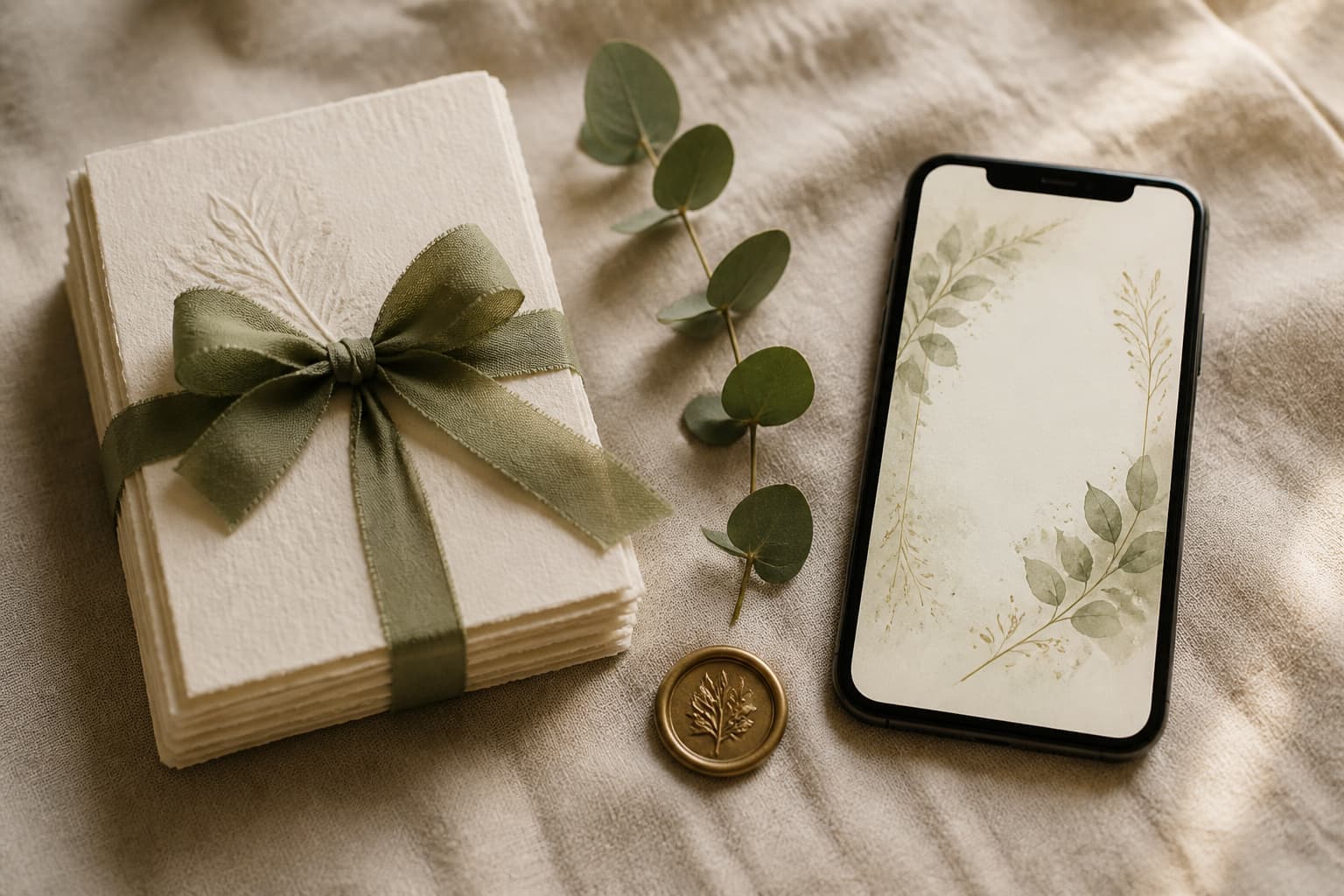
The practical version of all this is a card with a QR code on it, so a printed guest still reaches the programme and can still reply. There is a piece on doing both without doing the work twice.
Would you rather hand it over?
The thing that offends more than any format
Getting the name wrong. A misspelled second name, a Ninang listed as a Tita, a deceased parent left off, or a household addressed as one person. Those land far harder than a link ever has, and unlike the format, they are permanent on a printed card.
This is the one real advantage a link has in an etiquette conversation. A wrong spelling on a page is fixed in ten minutes and every guest sees the corrected version. A wrong spelling on three hundred printed cards is a story your family tells for twenty years.
If you are working out how to word any of it, including how to name a parent who has passed, we have written that up.
Asked about this
Are digital invitations rude for a Filipino wedding?
Not in themselves. What reads as rude is being included in a group message of forty rather than asked individually. Sent one to one with a line written for that person, a link is received as warmly as a card, and it can be corrected if a name is wrong.
Will my lola be able to open a digital invitation?
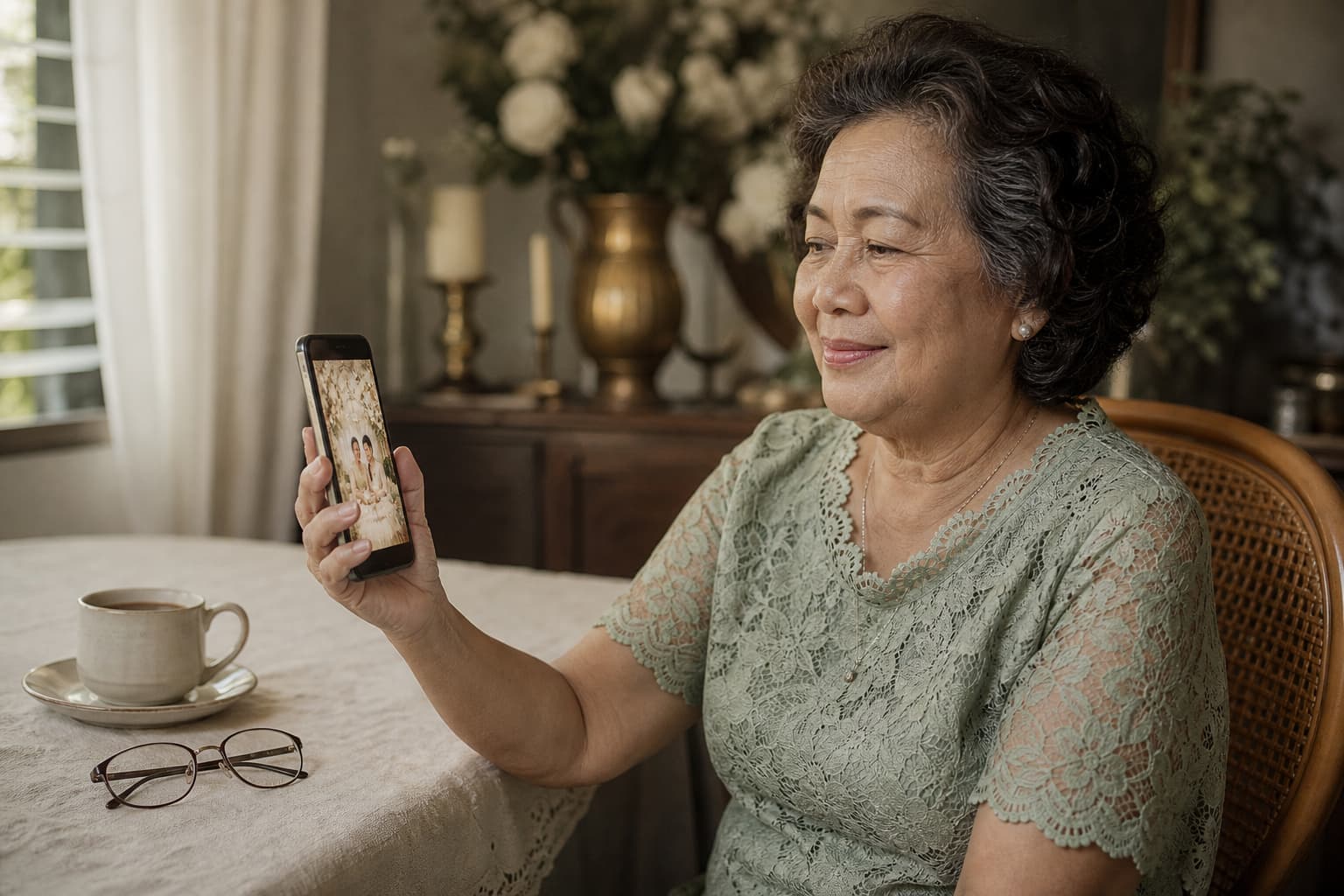
Almost certainly, if it opens in a browser without an app or a sign-up. Plenty of lolas use Messenger daily. The invitations older guests struggle with are the ones asking them to install something or make an account first.
Should I print invitations just for the older relatives?
It is the usual compromise and it works. Fifteen to forty cards covers the parents, the principal sponsors and the lolas, costs a few thousand pesos, and takes the question off the table entirely for the people most likely to raise it.
How do I send a digital invitation politely?
One to one, with a sentence of your own above the link saying why you want that person there. It takes an evening to do for a hundred guests and it is the difference between an invitation and a notification.