The Filipino wedding entourage list, in the order it is read
A Filipino wedding entourage list is longer than almost anywhere else in the world, and the order it is written in is the order people will walk. Getting it right is not etiquette for its own sake: it is the difference between a coordinator who can run the processional and one who is asking questions in the vestibule.
Wording and details5 min read
The full list, in order
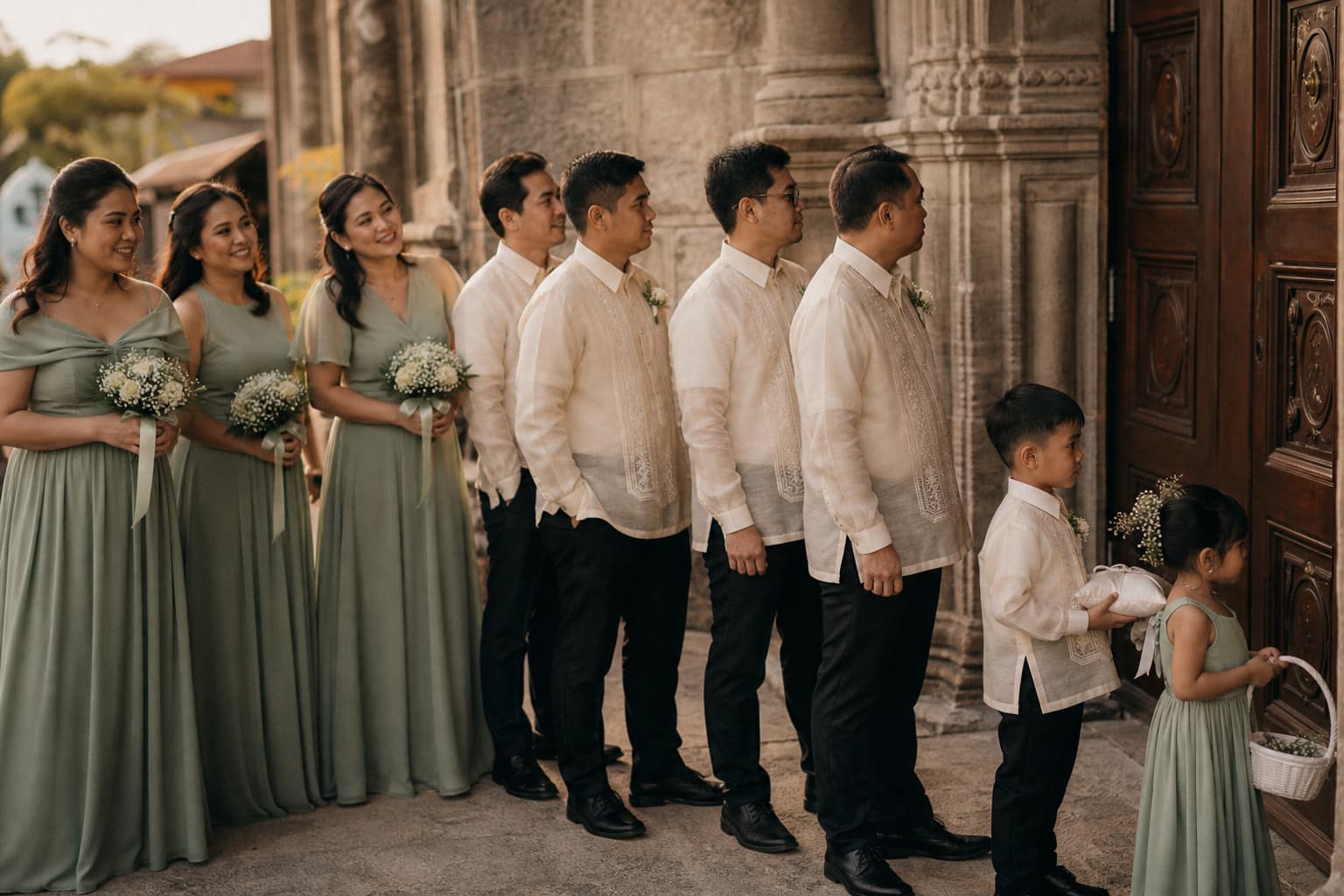
Eleven groups, in this sequence: both sets of parents, principal sponsors, secondary sponsors, best man and maid of honour, groomsmen and bridesmaids, the bearers, the flower girls, the groom, and the bride with her escort. That order is both how it is listed and how it walks.
- 01Parents of the groom, then parents of the bride
- 02Principal sponsors, ninong and ninang, paired
- 03Best man and maid of honour
- 04Groomsmen and bridesmaids, paired
- 05Secondary sponsors: candle, veil and cord, three pairs
- 06Ring bearer, coin bearer and bible bearer
- 07Flower girls, and the junior groomsmen if there are any
- 08The groom, usually already at the altar or walking with his mother
- 09The bride, with her father or whoever is escorting her
Where families differ
Some list the bride's parents first, some walk the groom in rather than having him wait, and plenty of parishes have their own preference. Ask the church and the coordinator, then write it the way it will actually happen rather than the way a template says.
Principal sponsors, and why there are so many
Because being asked is an honour and a Filipino family has a lot of people to honour. Thirty principal sponsors is not unusual and forty happens. They are listed in pairs, ninong and ninang, and every single one belongs on the invitation by name rather than as a count.
The pairing is worth getting right because it is how they will stand. A couple who are married to each other should be listed together, and anybody paired with a stranger will find out about it in the church, which is not the moment for that discovery.
This is also the single most common place a printed invitation runs out of room. A layout designed for eight names starts to look broken at twenty-four, and shrinking the type until it fits is how you get an invitation the older half of the list cannot read.
Secondary sponsors and what each pair actually does
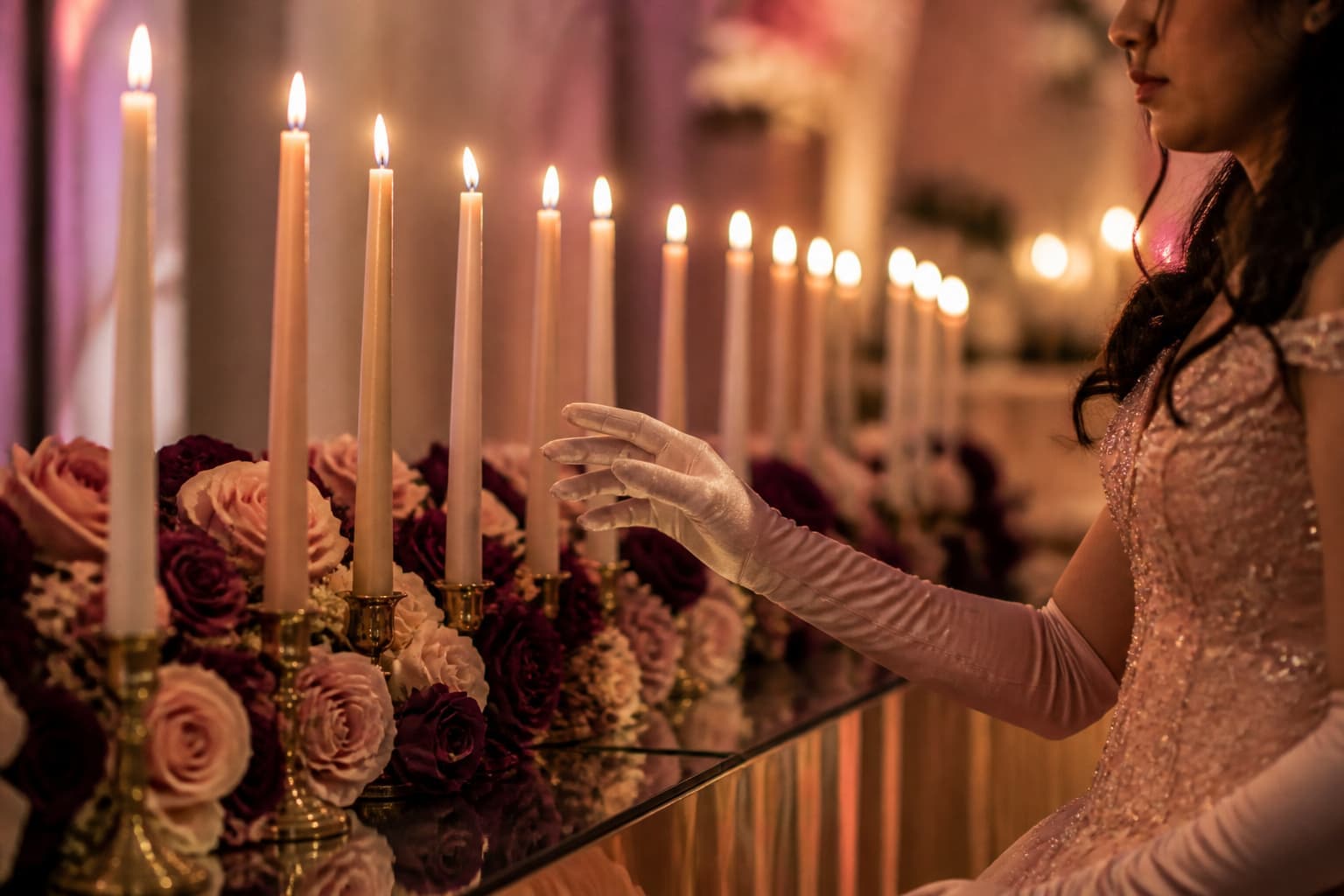
Three pairs, each with a job during the rite. The candle sponsors light the two candles, the veil sponsors pin the veil over the couple's shoulders, and the cord sponsors place the yugal. They are usually younger than the principal sponsors and they have something to do rather than only to witness.
| Pair | What they do | Worth telling them |
|---|---|---|
| Candle | Light the candles on either side | Which side, and when in the rite |
| Veil | Pin the veil across both shoulders | That it needs two hands and a steady one |
| Cord | Place the yugal over the couple | That it goes on after the veil |
Naming the role beside the names is worth doing on the invitation. Most people asked to be a veil sponsor have never done it, and knowing in advance is better than being handed a veil at the altar.
The bearers and the flower girls
Ring, coin and bible bearers, then the flower girls, and often junior groomsmen alongside them. These are the children, and their names go on with full names rather than nicknames, spelled the way their parents spell them, because their parents will read this invitation more carefully than anyone.
The coin bearer carries the arrhae, which is the one item most couples forget to tell anyone about until the week of the wedding. If a child is carrying it, an adult needs to be holding it until then.
Give the children's section a little more room than the arithmetic requires. It is the part of the entourage list that families photograph and send to each other, and it is worth being generous with.
Would you rather hand it over?
Naming parents, including the ones who have passed
Both sets go at the top, where they belong. If a parent is no longer living, they can be named there too, in whatever words your family uses for it. Some families add a small marker beside the name, some write a separate line, and some prefer nothing at all.
There is no single correct convention here and it is not a design question. Ask the family whose parent it is, use their words, and do not offer them a template sentence to choose from. The wording piece goes into this more fully.
The one practical note: whatever you decide, get it right first time. This is the line on the invitation that a family will notice, and it is the one you least want to correct afterwards.
Fitting all of it somewhere guests can read
An entourage of sixty names does not fit on a folded card at a legible size, which is why most Filipino couples put the full list on a page and keep the printed card to the headline details. Guests then scroll to their own group and find their own name.
Finding your own name is the part that matters, and it is the one thing a card does badly. A guest looking for their name on a printed insert is reading sixty names in six point type; on a page they scroll to their group and it is there.
If you want each household to open a page addressed to them by name, that is possible too. Personalised guest links are ₱999, and the full entourage sits on every wedding invitation we make regardless.
Asked about this
What is the order of a Filipino wedding entourage?
Parents of the groom, parents of the bride, principal sponsors, best man and maid of honour, groomsmen and bridesmaids, secondary sponsors, the bearers, the flower girls, the groom, then the bride with her escort. Parishes vary, so confirm with the church.
How many principal sponsors can you have?
There is no fixed limit and Filipino weddings often have twenty to forty. What matters is that every one is named on the invitation and paired the way they will actually stand, because a sponsor paired with a stranger finds out in the church.
What is the difference between principal and secondary sponsors?
Principal sponsors, the ninong and ninang, are witnesses and are usually older. Secondary sponsors are three pairs with jobs during the rite: candle, veil and cord. Naming the role beside the names helps, since most have never done it.
How do we include a parent who has passed away?
Name them at the top with the other parents, in whatever words your family uses. Some add a small marker, some write a separate line, some prefer nothing. Ask the family it belongs to and use their words rather than a convention.